
By Jeremy Wesley
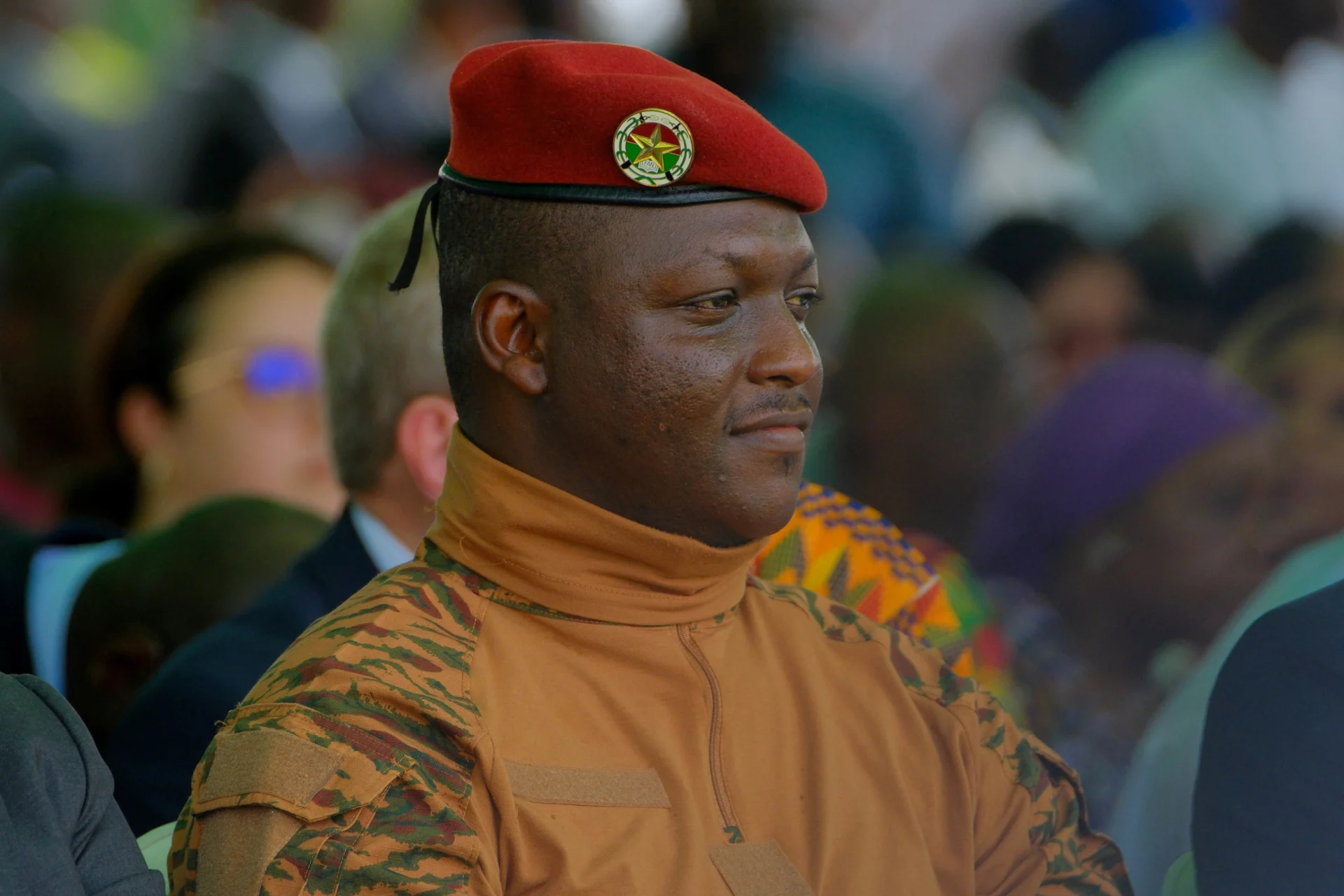
Burkina Faso president Captain Ibrahim Traoré while making a national broadcast caused a controversy on social media regarding burkinabe students studying abroad. In his speech Capt. Traoré mentioned that there are 800 Burkinabe students studying Sharia and Islamic Jurisprudence in Saudi Arabia that the Burkinabe government were unaware of, criticizing their decision to study Sharia instead of technical and vocational skills the nation needs for development. Along with this he stated he has rejected calls to make Sharia the law in the country and stressed religious freedom in Burkina Faso and mentioned how religion is exploited by insurgent groups. These comments have caused an uproar on social media, particularly Twitter among Arab and African muslims on social media suggesting Traoré has abandoned islam, ignoring in this same speech he openly stated he is muslim, and his promotion of secularism. This has led some Pan-African commenters to discuss how religion has been used to further western interests mainly the creation of the Muslim World League and Saudi Arabia’s promotion of Wahhabism.
In the early 1900s and the outbreak of the First World War the British Empire, facing the growing influence of the Ottoman Empire sought a relationship with Abdulaziz Ibn Saud, known in the western world as Ibn Saud, who was fighting Ottoman forces for control over Arabia and in 1915 this led to the signing of the Treaty of Darin, where in exchange for his allegiance against the Ottoman Empire the British recognized Ibn Saud as the Emir/Sultan of Nejd and Hasa, one of the precursor states to the modern Kingdom of Saudi Arabia which was established by decree by Ibn Saud making him the country’s first king. Ibn Saud’s rule was marked not only by his military conquests but also his alliance with Muhammad ibn Abd al-Wahhab, the founder of Wahhabism beginning in 1744. Wahhabism, which is still the dominant ideology in Saudi Arabia, was used by Ibn Saud, using descendants of Abd al-Wahhab as advisor, as a way to justify his rule under the banner of “purifying” Islam. This is despite some scholars such as Yasir Qadni, the Dean of Islamic Seminary of America, reject Wahhabism, partially over its emphasis on loyalty to rulers, its interpretation of Jihad to mean holy war, and with its antagonization of the non muslim world including Abd al-Wahhab suggesting the Ottoman Empire had deviated from Islam and started to steer towards paganism. With the discovery of oil in 1938 the US-Saudi relationship started to formalize with the signing of the Quincy Pact signed by President Franklin D. Roosevelt and King Abdulaziz saw US protection of the Saudi monarchy in exchange for unfettered access to Saudi’s Oil reserves. One key part of the relationship was Saudi’s insistence of propagating Wahhabism as a condition of its rule which the US overlooked due to its prioritization of Cold War alliances, making Saudi Arabia a key part of its anti communism fight in the Middle East. This is also led to the promotion of King Saud by the United States in the 1950s under President Eisenhower seeking to isolate Egyptian President Nasser whose ideology, commonly known as Nasserism, over his promotion of Pan-Arabism, socialism and anti-imperialism which saw popular support across the Arab world including the revolutions in North and Yemen and in Libya by Muammar Gaddafi. This was also seen when a report by the US Air Staff and Command college available on the Defense Technical Information Center website stated that the People’s Democratic Republic of Yemen or South Yemen, which became the Arab World’s only Marxist-Lenist state, to be the most dangerous to Saudi Arabia and western interests due to its success of reconciling conservative Islam and Marxism.
Another tactic used by the west was the CIA backing of the forming of the World Muslim League and the Organization of Islamic Cooperation formed in 1962 and 1969 respectively. In addition Saudi Arabia also created an Islamic financing system known as the Islamic Development Bank in 1973 the same year as the Oil crisis where King Faisal of Saudi Arabia along with other members of the Organization of Arab Petroleum Exporting Countries (OAPEC) announced that it was implementing a total oil embargo against countries that had supported Israel during the Yom Kippur war/ Fourth Arab-Israeli war. The oil revenue of the oil crisis which coincided with the decline of Nasserism with Nasser’s death in 1970 and his successor Anwar Sadat who promoted a pro western/capitalist stance also saw Saudi Arabia’s rise. This new Islamic financing system which tied many countries in Africa, Asia and the South West Asia to the system poured vast amounts of money to the OAPEC countries directly into banks, controlled by conservative muslims and the Muslim Brotherhood funded sympathetic politicians, parties and media companies as well as the business ventures of the middle class. Additionally western banks also pitched money into this system seeking to gain access to the petrodollars coming from it including Citibank, Chase Manhattan, Price Waterhouse, and Goldman Sachs. Close ties were forged between neoliberal guru Milton Friedman and his disciples at the University of Chicago and the Islamists, with investigative journalist Robert Dreyfuss stating “Islamic finance repeatedly relied on right-wing economists and Islamist politicians who advocated the privatizing, free-market views of the Chicago school.” This has made Saudi Arabia a key player behind the scenes on the backing of Islamism.
Leave a Reply