
By Ron King III
Abstract
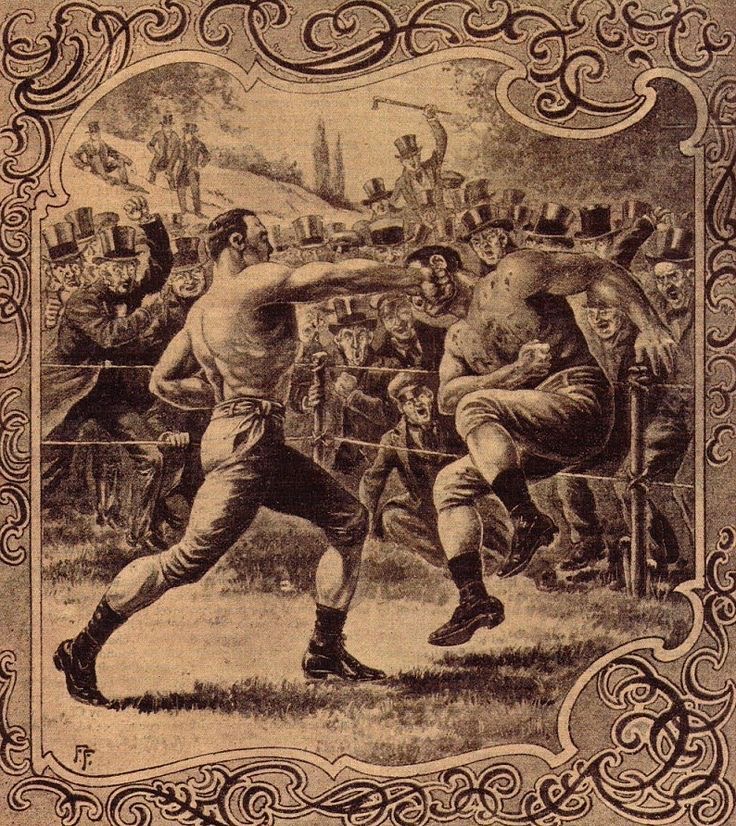
This research paper is about the origins of modern-day boxing starting with 18th century bare-knuckle fighting which is referred to as “pugilism.” Using primary and secondary pedagogical sources to trace the history of how boxing was taught in 18th century England, this paper uses historical materialism to develop a thesis which suggests that the reactionary sociocultural elements that can seen within boxing and other combat sports in the 21st century were already developing in their earliest stages in the 18th century with men such as Bill Richmond and Daniel Mendoza being unique examples/foils. Rather than viewing pugilism as an
observer or fan, this research seeks to engage meaningfully with the pedagogical improvements of pugilism that have led to what we now know as modern-day boxing and how these developments emerged parallel to the Industrial Revolution, The Enlightenment and an emerging Eurocentric global narrative that was being spread throughout the world based on mythmaking and nationalism.
introduction
Pugilism is one of the oldest sports in the world and also one that has dealt with
significant controversy throughout its entire existence despite what fans and supporters want to believe. The Enlightenment ushered in a new era of philosophical and scientific debate which presented an opportunity for a resurgence of the sport bare-knuckle boxing, referred to as pugilism, that was sparked by the likes of men such as John Broughton who is credited with being the first to codify rules for the sport of boxing all the way to men such as Daniel Mendoza,a Jewish prizefighter who is considered to be a pioneer in boxing technique and training methodology. Despite Mendoza’s popularity as a fighter and the “founder” of modern boxing from the viewpoint of technical development, there is far too much emphasis on his personal story and mythology despite the fact that much of it is inconsistent in the same way that modern boxers tend to have their legacies greatly overexaggerated or undermined for a multitude of
reasons. The casual observer or fan assumes these boxers are larger-than-life and “heroes” but the reality is that they are human beings with skills influenced by the environment in which they learn how to develop the most effective style for their opponents based on their personal and physical attributes.
Even though the Enlightenment marked an era that influenced and defined many of the liberal values people hold today, the story of the development of the “sweet science” reveals that the use of this scientific terminology was nothing more than a way to intellectually justify participating in a politically contested activity that found its supporters amongst conservatives and radicals in England with the conservatives eventually winning in the long-run. Mendoza’s Art of Boxing played a unique role in the history of 18th century boxing by being one of the most well-known manuals that explicit refers to pugilism as a science and practitioners of pugilism as scholars in later sections of the book. Despite the mythmaking and
invented traditions associated with 18th century boxing, the pedagogical development of boxing in the 18th century marked a turning point in the history of the sport but this development was not unique to Europe. Rather than associating pugilism with almost revolutionary fervor, pugilism needs to be viewed as a significant historical development that influences our modern conceptions of “boxing” even though this has caused dire consequences for the historical, social,
and economic development of the sport.
Pugilism vs. Boxing
Pugilism is defined as “the profession or hobby of boxing”, where as “pugilists” are
simply boxers or professional boxers. Today, these terms are used interchangeably amongst contemporary students of boxing but in order to clarify definitions to set the tone for the rest of the argument, “pugilists” will be differentiated from “boxers” who compete with gloves on their fists to acknowledge the fact that fighting bare-knuckle and fighting with gloves are two different types of fights. Although this is a formal essay, it is impossible to discuss combat sports without using jargon that is reminiscent of slang terminology but it is simply jargon associated with pugilism or other combat sports. Pugilism has been a predominantly lower-class sport since its inception and the terminology from 18th-21st century reflects this which is a consistent theme in the history of the sport. Professor TJ Desch-Obi in his article Black Terror: Bill’s Richmond Revolutionary Boxing provides a starting point for potentially delineating between boxing and pugilism as two different sports but in order to expand this for the topic, it must also be stated that certain forms of pugilism have different origin points depending on the practitioner’s personal background. Pugilism does not just intersect with the identities and social statuses of the practitioners who participate in the activity but rather the pugilists are the ones who define the boundaries and logic of the discipline within the confines of existing social norms or against them. This is simple in theory but there is a common practice in which scholars who study the history of boxing focus on individual pugilists from the academic perspective without ever engaging in the theory behind why somebody feels the desire to ‘fight’ but this is not a bad thing in and of itself.
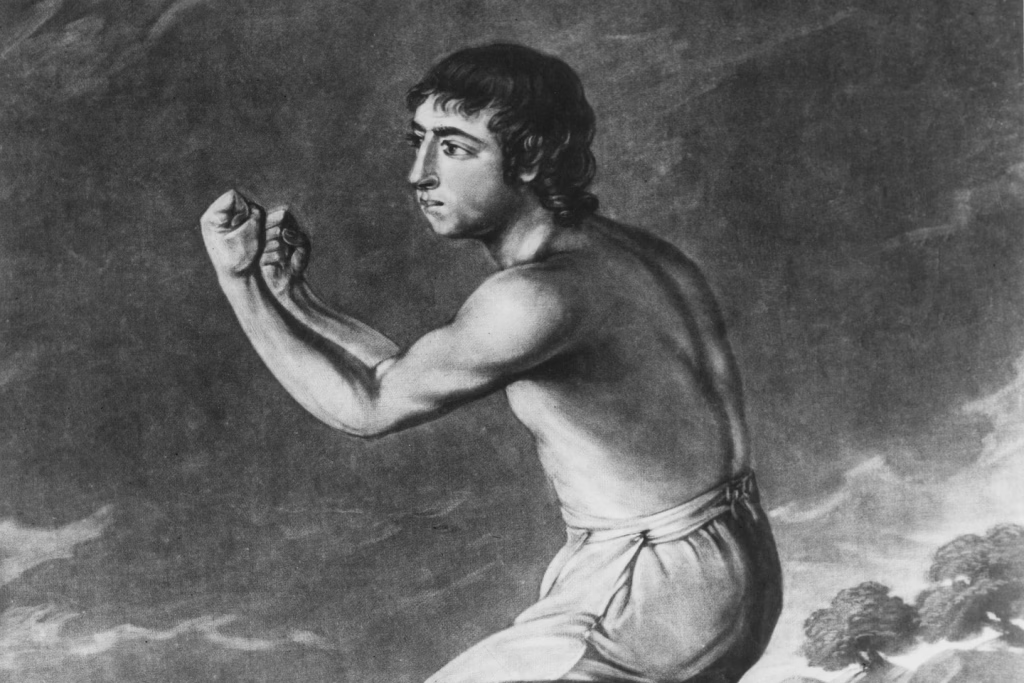
In particular with Daniel Mendoza, he occupies a space in which his identity as a Sephardic Jewish man competing in England was one of the things which made his fame stand out the most to scholars who have researched him because the question had to be asked about how he was both a member of an oppressed population yet a symbol of national English pride. For the sake of the following arguments, the most important aspects of Mendoza’s identity that need to be discussed (outside of his Jewish heritage) were his roles as a pugilistic trainer and most importantly, an entertainer. In order to understand the larger argument around pugilism’s chauvinistic roots, we must look outside of the scope of Mendoza as well as use him as a brief example of larger social forces at play.
pugilism of the oppressed
To start let us be very clear that pugilism is not a unique sport that the English and other European nations have any historical claim to advancing as a discipline. There is nothing inherently European about pugilism because it is a form of physical education that is developed in response to a need of personal self-defense or personal leisure in moments where one may not have a weapon. In fact, anybody who currently trains martial arts knows that you can find
martial arts styles all over the world that developed specifically as a response to European colonialism and many of these styles organically developed pugilistic elements in them, especially if they are martial arts that come from African or Southeast Asian traditions.
To debunk this notion of British pugilism being the only form of “proper” fighting as espoused by English pugilists and contemporary boxing enthusiasts, we shall discuss a pugilist who became the first African-American sports star in England by the name of Bill Richmond (1763-1829). In contrast to Mendoza, Bill Richmond’s success as a fighter was met with scorn and animosity due to his background as an African living in England along with his employment as a tradesmen which afforded him an opportunity towards some semblance of financial stability
unlike his contemporaries.
Despite him being regarded as a highly skilled fighter, his style was unique compared to the common methods espoused by the lineage of British pugilism and was met with confusion due to Richmond’s unorthodox emphasis on defensive agility. British pugilism valued a concept called “bottom” in which it is defined as the ability for a fighter to stand in the pocket of a hand-to-hand exchange and withstand the punches. Richmond had a style that British pugilists deemed cowardly despite his immense success in evading and striking without taking any or minimal damage, a similarity his style had to Mendoza’s which influenced Richmond’s rather racist nickname “The Black Terror”.
Despite the accusations of cowardice due to his style, Richmond became a respected and highly sought after trainer in pugilism and is most notably associated with being the cornerman of another famous African-American boxer named Tom Molineaux (1784-1818) from Richmond, Virginia, who was also a formerly enslaved African that was able to seek emancipation through combat. Although there is little to no evidence to trace where exactly Richmond developed his pugilism skills, Professor Desch-Obi uses contemporary knowledge of the human trafficking of enslaved Africans in his article about to trace the lineages of African martial arts based on travel routes associated with the slave trade to provide the closest thing historians have to an answer.
Professor Desch-Obi goes through a brief historiography of how African pugilistic arts that were traditionally found in the Angolan regions of Africa where slap boxing, pugilism and early forms of kick boxing were being experimented with and developing in reaction to the continental apocalypse of the human trafficking happening all over the coasts of Central/West Africa. Although there are similarities, the context of these skills changed dramatically due to the human trafficking of many Angolans to the Americas in areas all over the Southern United States and Central/South America where these pugilistic styles can still be found with practitioners. It is still unknown as to where Bill Richmond’s skills come from, but there are significant parallels between the description of how he fought and the Angolan pugilistic arts that spread throughout the African diaspora in both North and South American plantations. To this day, Angola still has a popular martial arts scene as well as a growing mixed martial arts community due to the country’s connections with Brazil because of the Portuguese slave trade.
The example of Bill Richmond is just one of many, however the point remains that fighting and combat cannot be viewed as insular topics with simplistic histories. There is no individual “ownership” over any style of combat and the only thing that matters is results even in the face of clear prejudice and discrimination which would be appealing to members of the lower-class, let alone formerly enslaved Africans. Around the same time that pugilism was being introduced to English elites as a tool to promote nationalism, masculinity and French xenophobia, the lower classes in and outside of Europe were evolving and experimenting with their own fighting arts in reaction to an evolving industrial and colonial landscape. The dialectic between the emerging global market economy and the pre-existing forms of combat sports that existed for centuries in places where they had already existed were in an incubatory period starting in England. The importance of English pugilism emerging out of the Enlightenment and the Scientifc Revolution cannot be understated.
If we think about how empiricism as scientific philosophical theory underwent various transformations and branched off in different directions, we should also try to see if this applies to other disciplines too. In the case of the pugilistic arts, if England became one of the first countries to use pugilism as a tool of nationalism and unity against foreign invaders then one has to ask who these invaders are. To go back to Bill Richmond, he embodied almost the same defensive prowess and fighting intelligence displayed by Daniel Mendoza yet he was most certainly not regarded as a national hero. Although pugilism was not inherently political, classist, or racist because it existed in many places before being formalized as an British activity, these present social beliefs and attitudes combined with pugilism in this laboratory of an emerging diverse lower-class who used the sport as a way to earn money and gain status in a society heavily stratified by an elite class that was having a national identity crisis due to military threats.


Leave a Reply