
On Black Futurism and the Violence of Nostalgia
for blueprints for the unborn, By Saint Trey Wooden
America loves Black history the way it loves a photograph that cannot speak back, a frozen image offered as proof of progress and then placed safely behind glass. Each year, the same refrains return, the same quotes trimmed to fit social media dimensions, the same gestures elevated while their demands disappear. The past becomes an object of admiration rather than instruction, something to be consumed rather than continued. In this arrangement, reverence does not trouble power; it reassures it.
What keeps surfacing as taste or representation circles something deeper, something bound up in how time itself gets arranged, rationed, and withheld. Nostalgia in the American imagination functions as a form of governance. It organizes history into a museum that charges admission, while the present bleeds onto the sidewalk. When Black resistance is continually routed through civil rights iconography, the culture trains itself to applaud disruption once it has been archived and rendered legible. Movements are honored as completed chapters. Living demands are treated as interruptions.
The consequence is a tightening horizon. A future made to feel smaller than it should.
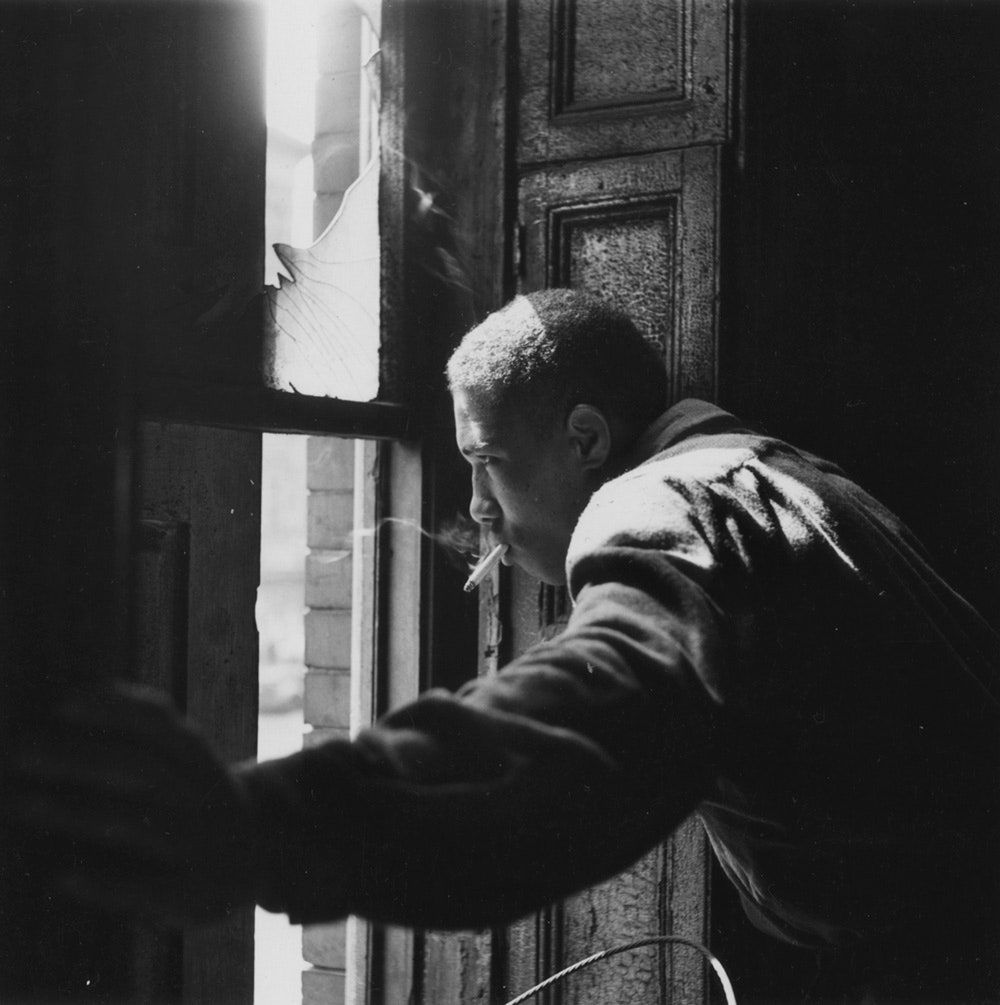
I learned this before I had language for it, while at my grandmother’s house that sat on the red clay of Statesboro, Georgia, at a table covered in my family’s photographs. The images carried the soft smell of dust and old paper. Marches paused mid-step. Faces angled toward something beyond the frame. Notes written on the backs of photos naming streets that no longer exist or exist now only as luxury developments. These images carried courage, but they also carried risk. What stayed with me was not what the photographs showed, but what they could not show. The long meetings after the cameras left, arguments about strategy, exhaustion that followed bravery, uncertainty that came with building something without any guarantee that history would bend in the right direction.
Those absences matter because nostalgia thrives on flattening. It smooths complexity into a script and turns struggle into scenery. The raised fist circulates without the clenched jaw, without the fear, without the organizing that made the gesture meaningful in the first place. In this flattening, Black people are allowed to be symbols and lessons, but rarely architects. Suffering becomes a memory, and triumph becomes a highlight reel. This work of building a future becomes unspeakable, even suspicious.
This pattern shows itself in the permissions placed around Black futurism. Certain visions get celebrated, widely distributed, and folded into the mainstream, while others remain fenced off. Black Panther offered a powerful moment of recognition for many viewers, but its futurism unfolds within familiar structures. Monarchy, inherited authority, and national myth remain intact. The radical figure is exiled, and we see the challenge gets absorbed. Audiences are invited to feel exhilarated by Black possibility while remaining assured that the world outside the theater does not require fundamental change.
A similar tension moves through Beyoncé’s Black Is King, a project rich with beauty, care, and intention. Ancestry, grief, and global Blackness circulate through stunning visuals that travel easily through the marketplace. History becomes aesthetic, while lineage becomes luxury. The past is invoked as inheritance rather than instruction, reverence rather than demand. Viewers are invited into intimacy without being implicated in consequence. The work feels expansive while remaining safely contained.
Corporate nostalgia sharpens into something unmistakable when prophetic language enters the frame. When Dodge Ram used Dr. King’s “Drum Major Instinct” sermon in a Super Bowl commercial, the backlash revealed a collective recognition that something had been taken. King’s critique of materialism became a soundtrack for consumption. His warning was repackaged as aspiration. Nostalgia gave the theft a respectful sheen. Reporting on the backlash captured that discomfort clearly, not because the moment was shocking, but because it was familiar (https://time.com/5132811/martin-luther-king-dodge-ram-super-bowl-commercial/?utm_source=chatgpt.com).
Across these moments, containment keeps repeating as the underlying logic. The past circulates most freely when it cannot instruct the present too clearly. Black resistance becomes celebratory once it no longer threatens capital, policing, borders, or property. The archive turns into a leash.
There are, however, other currents running through Black futurism, currents that refuse comfort as the price of entry. Janelle Monáe’s Dirty Computer moves through a world shaped by surveillance, criminalization, and queerness that refuses to disappear. Memory there operates as a battleground rather than a museum. The future unfolds through refusal, coalition, and risk. It remains unfinished and demands participation. We witness here how the work insists that imagination carries consequence.
Organizing helps clarify why this difference matters. Movements do not survive on memory alone. They survive through infrastructure, discipline, and power. Protest without organization turns into a spectacle. Spectacle without strategy gets absorbed. When resistance becomes recognizable, it becomes manageable. When it becomes manageable, it becomes marketable. Alicia Garza has written and spoken plainly about this dynamic, especially in her reflections on building durable power rather than momentary attention. (https://www.democracynow.org/2020/10/27/alicia_garza_book_purpose_of_power?utm_source=chatgpt.com).
This is where nostalgia does its most effective work, helping to provide comfort in place of continuation. It allows people to honor the past without committing to the present. It allows praise of ancestors while ignoring the conditions that made their struggle necessary in the first place.
Saidiya Hartman’s language around the afterlife of slavery presses so deeply because it refuses the comfort of arrival. The afterlife names the ways violence persists beyond formal abolition, not only through material inequality, but through the narrowing of imagination itself. It marks how the past continues to organize the present, how systems built to extract, discipline, and dispose do not disappear when laws change, but learn how to speak differently. The afterlife lives in policy, in geography, in surveillance, in the stories a nation tells itself about what has already been resolved.
What Hartman makes difficult, and therefore necessary, is the idea that freedom is not something achieved once and then inherited intact. The story this country prefers is a story of completion, a narrative arc that moves from bondage to liberation and then rests. Within that story, the past becomes proof of progress, evidence that the work has already been done. Hartman keeps pointing underneath that narrative, toward what continues to structure Black life long after emancipation has been declared, toward the unfinished business that nostalgia works so hard to bury.
The afterlife also names the psychic and imaginative toll of this unfinished work. It names the ways Black futures are constrained not only by material deprivation but by the expectations placed upon them. To live in the afterlife of slavery is to be constantly addressed by a world that insists you explain yourself through history, that asks you to perform injury as legitimacy, that offers recognition only when suffering is made legible. Imagination itself becomes a policed terrain. Certain futures appear unrealistic, irresponsible, or excessive because the past has been framed as both origin and limit.
This is where nostalgia becomes especially dangerous. By turning the struggle into a closed chapter, nostalgia offers a false resolution that allows the afterlife to continue unchallenged. It invites reverence in place of reckoning. It encourages commemoration without continuation. The archive becomes a substitute for repair. Hartman’s work insists that memory alone does not interrupt power. Without a willingness to confront what remains unfinished, remembrance becomes another way of managing dissent.
Hartman’s refusal of closure also disrupts the idea that progress moves cleanly forward. The afterlife does not obey linear time. It loops, repeats, mutates. It shows up in the persistence of carceral logic, in the normalization of premature death, in the ease with which disposability is justified. It shows up in the way Black communities are asked to be endlessly resilient without ever being allowed to be free. The afterlife makes clear that what is inherited is not only trauma, but responsibility, the obligation to build beyond what was made available.
Placed inside this framework, Black futurism stops being decorative or speculative. It becomes an intervention into time itself. It becomes a refusal to accept the past as destiny. Hartman’s work opens the space to understand futurism as a necessary practice in the afterlife, a way of insisting that what continues does not have to determine what comes next. The future, in this sense, becomes a site of struggle rather than a reward deferred.
To read Hartman alongside nostalgia is to see how power depends on closure narratives to sustain itself. To read her alongside futurism is to see why imagination remains one of the most contested terrains of freedom. The afterlife of slavery does not end because it is acknowledged. It ends only when the conditions that sustain it are dismantled, materially, politically, and imaginatively. Until then, the work remains unfinished, and any story that claims otherwise is doing the work of containment. (https://www.thenation.com/article/society/saidiya-hartman-interview/).
Within this terrain, Black futurism functions as a practice of refusal. It widens the horizon that keeps being narrowed. It treats imagination as infrastructure rather than indulgence. Freedom requires rehearsal. The Underground Railroad moved through secrecy, logistics, and care. It was a future practiced in real time, not a memory waiting to be framed.
The theft of our tomorrows happens when nostalgia manages our relationship to time, when it keeps directing attention backward while extracting energy from the present. Reversing that theft demands more than symbolic gestures. It demands organization, capacity, and a willingness to build past the point where recognition feels comforting.
That work looks like investing in organizing rather than visibility. It looks like political education that teaches how power operates rather than how history feels. It looks like mutual aid is connected to strategy rather than charity connected to branding. It looks like refusing to perform recognizable resistance when recognition becomes the price of containment.
Our ancestors took risks under conditions designed to break them. Their inheritance does not live in polished memory. It lives in the insistence on living beyond the limits they were forced to negotiate. Honoring that inheritance means continuing the work without shrinking it to fit the present’s appetite for comfort.
The future arrives through organized imagination, practiced power, and the daily refusal to let nostalgia manage our time. That refusal is not abstract. It is learned, built, and practiced together. If we want tomorrows that cannot be stolen, we have to stop treating the past as proof of progress and start treating it as a charge. The work ahead is unfinished.
Blueprints for the Unborn is a recurring column by Saint Trey Wooden for Iansá Magazine, examining the futures we are shaping in real time.
Corporate Nostalgia / MLK
• TIME on Dodge Ram MLK ad backlash
https://time.com/5132811/martin-luther-king-dodge-ram-super-bowl-commercial/
Protest as Aesthetic
• Teen Vogue on the Pepsi protest ad
https://www.teenvogue.com/story/pepsi-ad-starring-kendall-jenner-martin-luther-king-jr-daughter-bernice-tweet
Organizing & Power
• Alicia Garza on The Purpose of Power (Democracy Now)
https://www.democracynow.org/2020/10/27/alicia_garza_book_purpose_of_power
• Video: Alicia Garza author talk
https://www.youtube.com/watch?v=aOoGdDqOO_Q
Black Futurism (Visuals)
• Black Is King official trailer
https://www.youtube.com/watch?v=2zTB7s8Z5qA
• Dirty Computer emotion picture trailer
https://www.youtube.com/watch?v=jdH2Sy-BlNE
• “Django Jane” video
https://www.youtube.com/watch?v=mTjQq5rMlEY
Theory
• Saidiya Hartman interview, The Nation
https://www.thenation.com/article/society/saidiya-hartman-interview/
• Hartman, “The Afterlife of Slavery” (PDF)
https://assets.ctfassets.net/zzo3jtyu2pmq/7FSUDHRqWv2ahgxKDEJodv/b41b73c1ee6f16f8635f1148345c610e/Hartman_-_The_Hold_of_Slavery_-_READ.pdf


Leave a Reply