
By King X.
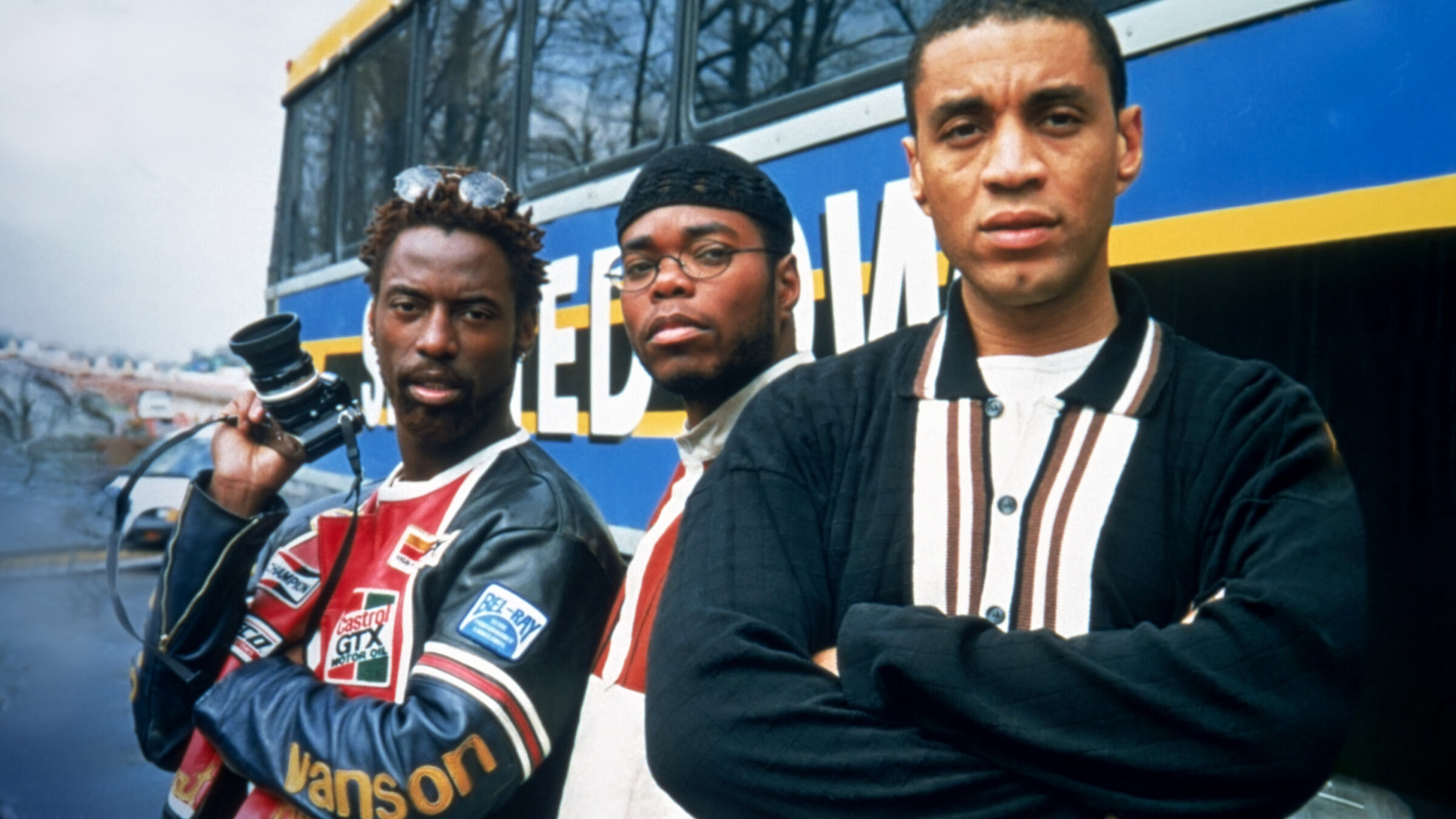
Spike Lee’s Get on the Bus is a cult classic. Although released in 1996, it remains deeply relevant to the social struggles of the Black community in the 21st century. The film follows several Black men from diverse social backgrounds, political and religious ideologies, and sexual orientations as they travel together to the 1995 Million Man March. It is saturated with Black stars who have become household names, including Bernie Mac, Isaiah Washington, Ossie Davis, Andre Braugher, De’Aundre Bonds, and Wendell Pierce, among others.
Because the film was released just a year after the Million Man March, the conversations in the movie capture—casually and realistically—the different opinions and concerns circulating within the Black community leading up to the event. One recurring debate involved the role of Black women in the struggle to make communities a “decent and safe place to live.” Some women felt the March was sexist; the character Shelly (Kristen Wilson), in dialogue with her boyfriend Gary Rivers (Roger Guenveur Smith), expressed, “This whole thing is sexist and exclusionary.” Later, when Gary and Flip (Andre Braugher) encounter two cheerleaders, Jamilia (Paula Jai Parker) and Gina (Gina Ravera), Jamilia challenges them by asking, “How do you brothers propose working things out without the sisters?” Yet not all women shared this critique. In fact, some of the most prominent women at the March included Rosa Parks, Dr. Dorothy Height of the National Council of Negro Women, and poet Maya Angelou.
Fatherhood also emerges as a central theme. Evan Thomas Sr. (Thomas Jefferson Byrd) is a father struggling to mend his relationship with his son, Junior—also known as Smoove (De’Aundre Bonds). Their conflict stems from Evan Sr.’s past absenteeism, something he tries earnestly to address during the trip to Washington, D.C. Literally shackled together, they are forced into proximity, giving them space to confront their disconnect. Their dynamic highlights the impact of both absent and present Black fatherhood, illustrating the importance of family and the desire among Black men to be responsible fathers. Evan Sr. admits, “You were never the problem… I was the problem because, after you were born, I was not man enough to take on my responsibility.” Junior’s growth is reflected later in the film, when—after Jeremiah (Ossie Davis) is hospitalized and the group is divided on whether to stay or continue to the March—he insists, “Pops, we can’t just leave him. Not least till we know he alright.”
The Million Man March itself was a day of “atonement and reconciliation,” or, as Gary Rivers says, “time for the brothers to work it out.” Minister Farrakhan echoed this message during the March, stating that the event was called “for atonement and reconciliation.” Similarly, the bus driver George (Charles S. Dutton), after attending the March and addressing the men, explains, “The real Million Man March won’t start till we Black men take charge of our own lives and start dealing with crime, drugs and guns and gangs and children having children and children killing children all across the country.” His words mirror Minister Farrakhan’s insistence that Black men must change course and take responsibility for the wellbeing of their communities.
A drawback of Get on the Bus is the underdeveloped portrayal of the Nation of Islam passenger. His lack of dialogue prevents him from offering any perspective at all. Including his viewpoint could have added more depth and ideological range to the group dynamic. A few moments, such as Jeremiah being found unresponsive at the back of the bus, also dip into theatrics.
Nevertheless, Get on the Bus is a powerful film for anyone interested in revisiting the motivations, tensions, and hopes of the Black men who journeyed from across the country to attend the Million Man March. It remains a compelling window into a historic moment of collective self-reflection and unity.



Leave a Reply