
By MariJean Wegert
The following piece was originally published on marijeanelizabeth.substack.com
PART IV
DISCUSSION
In the first few pieces, I described the movie Sinners and Kendrick Lamar’s iconic halftime show as examples of ritual theater, and recalled before theater became a competition or performance, it was a communal trance state. In this section of the essay I’m going to root this idea of ritual theater into a broader sociological context.
Black Elk, a Lakota shaman who saw the future in visions, had a series of dreams and visions that he brought to his tribe. (What happened after that until the summer I was nine years old is not a story, he said.) I read his book in a class I took on local indigenous literature and I think about it constantly. So much of it is inaccessible because at face value they just seem to be these wild visions (quad-color horses bringing curses? Prophecies of the end of the world! Hell, I even found out that he didn’t put all of his visions in there cuz they came across too crazy! (footnote he saw tiny people.)
But they are using a whole different framework, literally a different language. (footnote, my book club will be reading two books by indigenous authors on that, Sand Talk and Research is Ceremony, and I plan on having manic rants about those too, please read) One that wasn’t flattened by the need for cold logic alone, centuries of institutionalized religious oppression that disguised raw greed and power grabs. The Lakota didn’t have centuries of Roman Empire in their subconscious. They hadn’t been colonized in spirit. “Animism is Normative Consciousness” says Joshua Schrei in this podcast by the same name, (this is required listening in this curriculum fyi) and we think we’re so evolved by snubbing our noses at anything that hasn’t similarly been domesticated and neutered like a dog who doesn’t know what to do outside cuz it’s never touched grass it thinks it’s a foreign body. We love (even still) to toss around words like woowoo, insane, barbaric. Mmh. (footnote wherever we say “we have to draw the line somewhere” is where our intentionally curated blindness begins.
Anyway —the Lakota, I’m trying to say, knew that when you have a certain kind of dream it is brought to the person who can play it out in their community. Black Elk brought the dream to his community and they built it – a living ritual – right in their village. They brought in horses in white black and sorrel and buckskin. They brought in three horses, three warriors, three maidens.
They staged the dream.
They staged the dream!!
In physics, emergent energy systems (footnote i don’t even know if this is the right phrase but we’re shooting from the hip rn), the fractal body has as much power as the whole. When you create a unified system that is conscious of itself it becomes a power unit unto itself, where its relative size ceases to be relevant, because when energy systems move in alignment are congruent within themselves they begin to resonate as power.
They invite the resonance of the systems around them, regardless of complexity.
(Aka they can change things that seem way bigger than themselves simply by being.) the literal translation of the trite /trope “you have the power to change the world” or the new agey “the energy flows where the attention goes,” even.
EXISTENCE IS THE RITUAL THEATER OF THE SUBCONSCIOUS
I’ve studied and tried many different therapy modalities. An interesting pattern seems to be emerging: the therapy modalities with the highest rates of people leaving feeling acting better, of trauma healing, are ones that mirror ancient shamistic systems around the world. Eerily so. Appropriatively so. But western psychology is discovering what shamanistic cultures already knew. What do they do that’s so effective?
They treat the body as a ritual theater. IFS, a therapy modality that is shamanistic but doesn’t sell itself that way because we’re so primed to cry Barbary, studies and treats the body as a solar system of complexity, the physical complexity of a solar system and the energetic complexity of a book of lore—works. It works. It works it works it works. Go to talk therapy for years and come out of a couple IFS sessions you’ve gotten to places you can’t get to in years of talk therapy. (obligatory disclaimer this is not a promise, lord, and i’m not a therapist)
__
As soon as the purely aesthetic elements become dominant and detached from the human story, the public loses its way and does not know what to do before the stage, the book, or the picture. Understandably, people know of no other attitude when faced with such objects than that of habit, the habit of always becoming sentimentally involved. A work which does not invite this involvement leaves them without a role to play.
– Jose Ortega y Gasset, The Dehumanization of Art, 1925
__
Somatic therapy (a catch all term and I am not familiar with psych jargon) is about the body. It’s about the body’s movements. It’s the idea that when you have an emotional ailment there are physical components to it and one way to heal is to let your body find those movements. (David Bedrick is one who works brilliantly with both these modalities tougher)
I can attest to its power. It doesn’t make any logical sense, true. It’s hard to explain. But the fact that it works so well and that it’s so hard to explain or even sell to people is actually indicative of a different diagnosis: but if you can’t handle woo woo, you’re not only missing out on the diagnosis you’re missing out on the healing. Your loss. We each have our own delusions.
But what if we rebuilt these sensibilities?
That’s why ritual theater comes back to me.
DISCUSSION
One thing I’ve learned is that when you’re in the trance state of ritual –whether being in the flow of an art project, a cross country race, breathwork session, or drum session, you can’t really pause to explain it. They are different knowledge systems and there is an energetic cost to jumping lanes multiple times.
My college roommate was the first one to say it when I was asked to read a poem at my religious college’s worship day. I was reading her my long drafts of introductions and caveats and deference and she said simply “never apologize for or explain a poem. Never.”
So that means people gotta learn to track because it’s a current and we’re all in it. So track with me:
Sinners is ritual theater. It’s a fractal – Ryan Coogler is a griot. (footnote i attribute that idea to someone on tiktok) He wouldn’t say it cuz he knows it.
Remember the scene where Sammie plays the blues and invokes the ancestors past and future? Remember the prickle of goose flesh that rode up the back of your neck when you watched it?
Remember how you thought oh that’s a cool movie instead of falling to your knees mashing your teeth with awe? Did you feel the animacy of the film inhabiting your very body as you watched?
In literature the fractal is metadrama, and the trope is, “a play within a play”: the director put on a ritual theater for us and the scene where Sammie plays blues in a barn at the juke party was a ritual stage. Sammie and the director invoked the ancestors. We were the audience!!
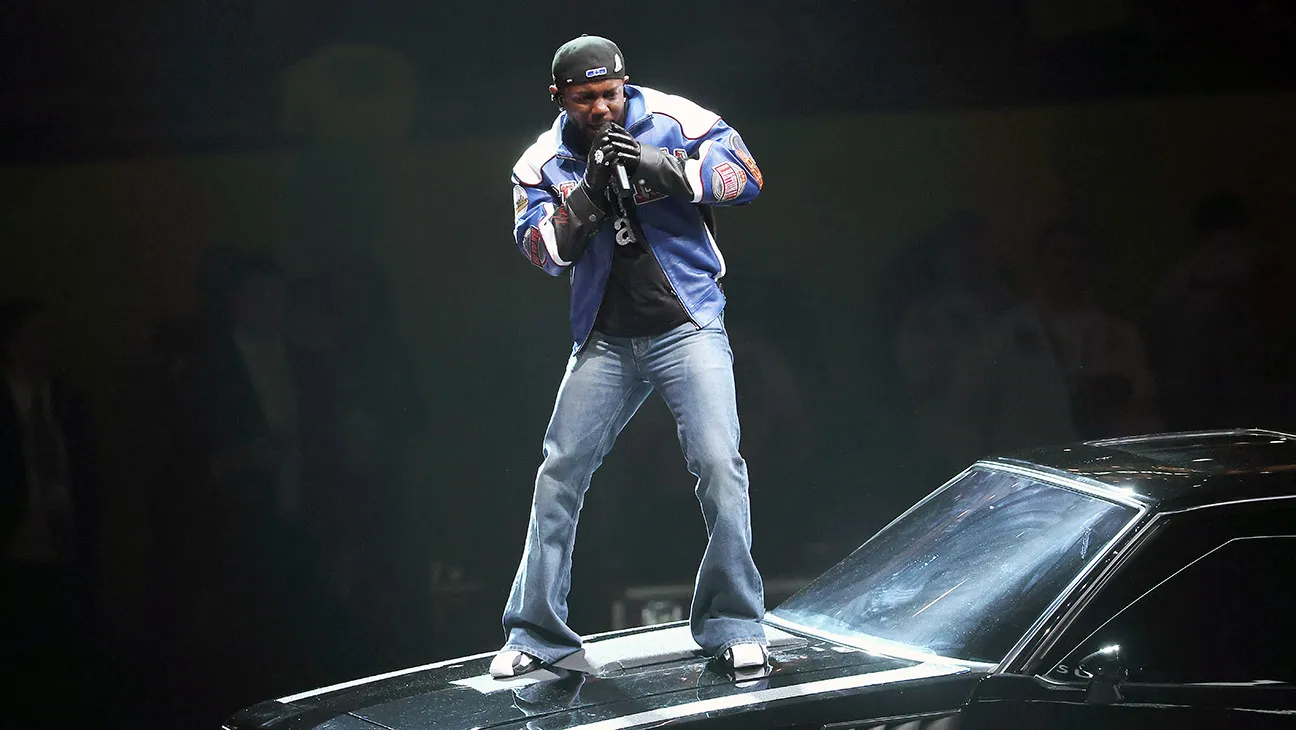
It was the same with Kendrick. We thought we were the audience – the stage, a world stage, but he looked at our white supremacy, (both obvious and external – orange man in power– and internal) in the eye and said without hesitation: the revolution is about to be televised, you picked the right time but the wrong guy. POW.
We don’t have to be just audience. We shouldn’t be. We take it into the world how we decide to. The potency of the moment is an invitation for us to participate. To get in the ring and dance. To let the body of the gods we want to come back to us to take over our bodies, to let them move us, to say yes. Because, we, like gods and vampires, await an invitation. Our work is to be ready for one when it comes.
The movie and the show were rituals down to the level of moments. Every move, every word, every camera angle were built like layers of spells for power for potency. They were talismanic.
Okay, so we solve the riddle when we live the riddle; so what do we do next?
Well, like I said, the thing about ritual theater and the thing about any good story is that it is structured with layers. You start at the level of understanding competency you have.
For some people the potency of the film, or the halftime show is in its awakening power. Some people still don’t believe in racism. (Me in 2016!!!!! Gawd.) I know that Kendrick’s allusion to 30 acres and a mule has sparked an entire new discourse in middle schools and high schools around history they didn’t even know (thank you tik tok but I can’t find the reference).
Some people have still never learned how to listen to the lived experience of someone else. Then go there. Go read like fury. (footnote Toi Smith has an entire free curriculum she will email to you, it’s incredible) Let your world explode. Let it ruin you and make you grieve and make you rage.
And some people watching got to be a part of the prayer. Got to say yes to the revolution. For some it is in its fullness: the trance state and entities invoked. Because we know a poem when we see it.
We were hollering in the seats. We were pouring with reverent tears. We were begging the blues gods, to the rap battle gods, let me be a part of this ritual, as a step stool, as a crumb of dirt. We enter the prayer with you. We enter the prayer with you.
And we know the gods answer the willing vessel who asks.
~~
This essay was monotonously and manicly constructed but my real work is with my breath and body and storytelling and inner world navigation.
This is just my artist’s statement.
I am a work of art, part of – not a jigsaw puzzle, nor a painting, nor a sculpture even or a gallery, but of a ritual invocation, the original poem, to the gods of healing, to the gods of aliveness, to the gods whose names we don’t remember but whose spirits we sense in the center of our very souls:
And there is no question that film, and that show called up the gods. Will you be there too?
This is an invitation.
CONCLUSION
This was written on Sunday May 25 the day when Saturn moved into Aries and I have had a stuck throat for a while. It’s 4 pm and I started writing at 7 in the morning. Yes I’ve been making art over the past six months (secretly, har har) but my weaving of mind and spirit have been stuck because I have been afraid of exactly one person’s judgement. This isn’t art, its voice – and I have been afraid of both its harsh edges and its lack of pure potency. That’s why it’s an artist’s statement, though, because I think we need this kind of education – it’s an arrow for the real education and a thread to the actual embodiment of aliveness that being an artist entails.
It’s funny because this is the first weekend without my daughters that I haven’t skipped out of town; in probably two years: it’s been uncomfortable as I toggle between sussing out delusion from what I actually need to mourn (running away all the time feels very good) and trying to sit in the very uncomfortable gravity of my own life this is what came up from the ground.
Yesterday I finished a first draft of a book I’ve been working on intermittently and slowly since 2019 when I left everything for a new life of I knew not what, and doggedly for the last 6 months as an obsidian lodestone like pull after a blindside breakup that didn’t break my heart but broke open a lot of wounds in a lot of places that just starting to scar over. Consider this artist’s statement, presented under protest but grudgingly admitting no one will know what the fuck is going on if it isn’t there under the painting. I gotta make the thing and explain the thing, like a weever needling thread in and out.
read part i, part ii, part iii



Leave a Reply