
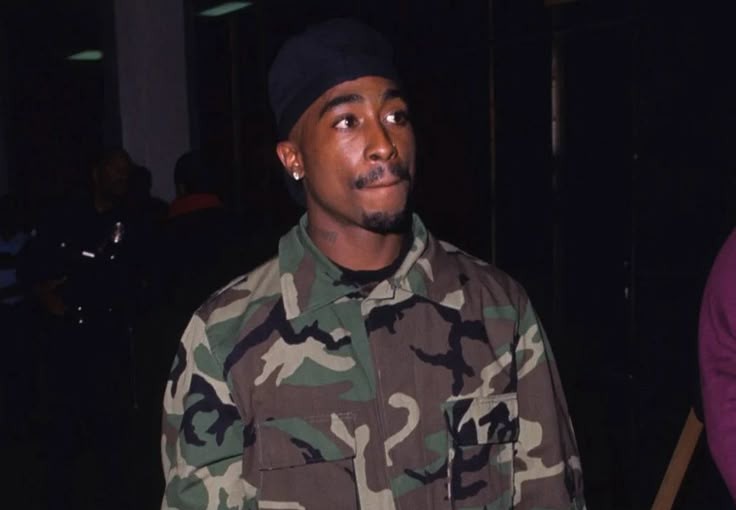
By Ras Ceylon
Tupac Amaru Shakur was assassinated almost 30 years ago to the day, but many still don’t understand the depth of his legacy. I have said for years in my Hip-Hop pedagogy that 2Pac is “the most important rapper of all time because he embodies the bridge between the Black Power Movement of the ’60s and ’70s and the Hip-Hop generation of the ’80s and ’90s.”
Born to two members of the Black Panther Party, 2Pac would go on to impact the world through his music, movies, and movement building. His life was cut far too short when he was violently gunned down on the streets of Las Vegas, transitioning into an ancestor at just 25 years old.
Everywhere I’ve traveled, from Sri Lanka to Jamaica and beyond, I have heard 2Pac’s music and seen his image celebrated amongst the masses. There’s a reason he resonates so deeply with oppressed peoples across the globe. To truly comprehend the impact of Tupac Shakur, we must dig deeper beyond the headlines and examine the lineage of resistance he embodies.
Born Into Revolution

Tupac Amaru Shakur was born June 16, 1971, in New York City to Black Panther Party members Afeni Shakur and Billy Garland, with Afeni being one of the New York Panther 21. Pregnant with Tupac and incarcerated during the case, she represented herself at trial. In May 1971, Afeni and her co-defendants were acquitted of all charges. Just over a month later, Tupac was born. Named after Indigenous anti-colonial Peruvian leader Túpac Amaru II, his name itself was a political inheritance. Tupac wasn’t simply born into a family—he was birthed into revolution.
His last name, Shakur, also carries deep meaning. Al-Shakūr—“The Rewarder of Thankfulness”—is one of the Names of Allah (SWT). Salahuddin Shakur, a member of El Hajj Malik El Shabazz’s (aka Min. Malcolm X) Organization of Afro-American Unity (OAAU) in Harlem, was the first in this extended political family to adopt the Shakur surname. Tupac’s stepfather was Dr. Mutulu Shakur; Assata Shakur was his godmother, and Geronimo Ji-Jaga Pratt his godfather. From childhood, he was surrounded by freedom fighters actively engaged in Struggle.
This upbringing also placed him within a community that was the target of intense repression. From J. Edgar Hoover’s persecution of Marcus Garvey to the FBI’s COINTELPRO war against Black liberation movements and the assassination of Chairman Fred Hampton and many others, the U.S. government, for generations, has attempted to eliminate effective Black organizers through the most nefarious and illegal tactics.
Panther Power
Tupac’s journey took him from New York City to Baltimore, where he studied acting, dance, and music before moving to Marin City, California, at 17. Although times were tough, his political consciousness continued to deepen. Still a teenager, Pac was organizing and being groomed for leadership in the New Afrikan movement before he came to Oakland. It was there that he connected with Shock G and Digital Underground, providing his opening into the widening world of Hip-Hop.
Alongside him was Yafeu “Yaki Kadafi” Fula, the son of revolutionaries Sekou Odinga and Yaasmyn Fula. A Black Panther and member of the Black Liberation Army, Sekou spent decades as a political prisoner after being convicted of charges connected to the 1979 liberation of Assata Shakur from prison. Tupac’s stepfather, Dr. Mutulu Shakur, was also convicted of charges related to Assata’s liberation and incarcerated for 36 years and ten months. Both eventually came home after over three decades of incarceration each, with there being Free Mutulu and Free Sekou campaigns in which many of us supported—but their freedom was bittersweet and far too brief. Mutulu had only months at home and Sekou less than a decade before both returned to Allah, in 2023 and 2025 respectively. Assata remained free in Cuba for over four decades, living in political exile until she passed away peacefully in 2025.
These weren’t distant historical figures to Pac—they were his family in real time. He referenced all three of them in his music, while Yaki Kadafi grew up alongside him and was regarded as his cousin. Yaki’s mother, Yaasmyn Fula, would go on to assist Tupac with his business affairs during the latter years of his life.
Pac would feature Yak on several of his early records and later make him a founding member of the Outlaw Immortalz. Tragically, Yaki was murdered just months after Tupac under suspicious circumstances. Any fight for justice for Pac must also remember the unresolved killing of Yak.

Street Fame
That revolutionary world shaped Tupac deeply, while his artistry took many forms. He was a thespian long before he became a rap star. At 12, he performed in A Raisin in the Sun at Harlem’s legendary Apollo Theater. His commanding performance as Bishop in Juice launched a film career that included Poetic Justice with Janet Jackson, Above the Rim, Bullet, Gridlock’d, and Gang Related. By his early 20s, Tupac wasn’t simply a Hip-Hop artist who acted—he was a bona fide movie star.
Yet, it was through music that Pac would reach millions with an unfiltered portrayal of ’90s Black life in Amerikkka. 2Pacalypse Now confronted police terrorism, poverty, racism, and state violence. “Brenda’s Got a Baby” told the devastating story of a 12-year-old girl failed by her family and society, while “Keep Ya Head Up” from Strictly 4 My N.I.G.G.A.Z. centered Black women, dignity, and survival. By Me Against the World, his voice had become increasingly personal, vulnerable, and introspective without abandoning the politics at his core. Though his sound evolved and mass appeal grew, the rebellion never left the records.
During this time, Pac also immersed himself in the Bay Area rap scene, collaborating with many of the region’s heavy hitters from Richie Rich to E-40 to Spice 1, and more. Oakland became home for Pac—he never stopped repping the Town. As he famously said in a 1993 interview, “If I’m gonna claim somewhere, I’m gonna claim Oakland… that’s where I got my game from.” Decades later, through an effort initiated by Councilwoman Carroll Fife, the city would honor that connection by naming a stretch of MacArthur Boulevard “Tupac Shakur Way” right near where he had an apartment by Lake Merritt.
As an Oakland-based educator, emcee, and organizer for over two decades, I can relate to Pac’s sentiment—as reflected in “Town Biz” with Mistah F.A.B., where we pay homage to 2Pac and the Town beneath the Tupac Shakur Way sign.
The System vs. Pac
Tupac didn’t just rap about police terrorism—he actively resisted it. In 1991, Oakland police stopped him for jaywalking before beating and choking him. Pac responded with a $10 million civil-rights lawsuit against the city, which was later settled. Two years later in Atlanta, he intervened in an altercation involving a Black man and two off-duty police officers. Both officers were shot, but charges against Tupac were ultimately dropped.
As his fame grew, so did scrutiny from politicians, law enforcement, and the media. Vice President Dan Quayle publicly denounced 2Pacalypse Now, declaring that the album had “no place in our society.” The institutions Pac challenged through his art increasingly became entangled with his own life.
At the same time, Tupac was attempting to translate ideas into action. T.H.U.G. L.I.F.E.—“The Hate U Give Little Infants Fucks Everybody”—was more than a tattoo and rap group. With guidance from Dr. Mutulu Shakur, Pac helped develop a THUG LIFE Code of Conduct connected to the gang-truce movement that emerged around the 1992 Los Angeles Rebellion. The code established principles intended to protect children and civilians, keep drugs away from schools, and resolve disputes without endangering the broader community. Tupac was striving to connect the realities of the streets with the politics he inherited, which he articulated passionately in this speech at the 1993 Indiana Black Expo.
Tupac on Trial: Free 2Pac!
The scrutiny surrounding Tupac was intensifying. In 1993, he was charged with sexual assault alongside several other men, including Jacques “Haitian Jack” Agnant. However, while Tupac would continue to face prosecution, the other men charged alongside him would not face the same consequences. Pac later addressed this on his posthumous release, The Don Killuminati: The 7 Day Theory. He rapped, on “Against All Odds,” “Knew he was working for the feds… same crime, different trials.”
Then, just one day before the verdict in his case, Tupac was shot five times and robbed at Quad Studios in New York—an attack he believed was connected to some of the same forces surrounding him.
In December of 1994, Tupac was acquitted of the sodomy and weapons charges but convicted of first-degree sexual abuse, specifically for forcibly touching the woman’s buttocks. He maintained his innocence. Sentenced to 1½ to 4½ years, he was sent to Clinton Correctional Facility, a maximum-security prison in upstate New York.
While incarcerated, Me Against the World debuted at No. 1, making Tupac the first artist to top the Billboard album chart while behind bars. After roughly eight months, he was released on $1.4 million bail pending appeal, with Suge Knight helping secure his release. He then signed with Knight’s Death Row Records and entered the most explosive period of his life.
The Diamond-certified double album All Eyez on Me propelled him to even greater heights, while the fallout from the Quad Studios shooting fueled his feud with Biggie and Bad Boy, amplified by the media into a fabricated East Coast vs. West Coast war. The division was eerily reminiscent of the internal conflicts his mother’s generation experienced in the Black liberation movement, fueled by COINTELPRO infiltration, agitation, and provocation.
Even amidst the conflict, Pac was reaching toward unity. In 1996, he brought together his Outlawz—most with East Coast roots—Brooklyn’s Boot Camp Clik, Greg Nice, and others to record One Nation, an ambitious project built around East/West collaboration that remained unfinished. Pac was at war while trying to build unity.
The Assassination: 30 Years Later

On September 7, 1996, Tupac was shot in Las Vegas after attending the Mike Tyson fight. He died six days later. He was 25 years old.
For nearly three decades, no one was prosecuted for his murder. That changed in 2023 when Duane “Keffe D” Davis became the first person charged in the killing—after years of publicly discussing his involvement in interviews, a book, and podcasts. On August 31, 2026—just a week before the 30th anniversary of the shooting—a Las Vegas jury found Davis guilty of first-degree murder for orchestrating the attack. Although prosecutors did not allege that Davis pulled the trigger, they argued that he provided the gun and helped organize the retaliation that led to Tupac’s death. Davis is scheduled to be sentenced October 13 and plans to appeal.
Thirty years later, the conviction provides a slight measure of legal accountability in one of Hip-Hop’s most infamous murders. Yet questions surrounding the full circumstances of Tupac’s assassination remain, as do questions about the extent of government records on Pac beyond the heavily redacted FBI files that have been made public.
A Legacy They Can’t Kill
Tupac Shakur did more in 25 years than most do in a lifetime. He was an emcee, actor, leader, and Black Panther Cub—a complicated revolutionary artist whose work spoke to all aspects of life and continues to resonate around the world.
For me, Pac’s story isn’t frozen in the ’90s. As someone who has spent many years organizing in Oakland alongside Chairman Fred Hampton Jr. of the POCC/BPPC, I bear witness to the direct thread connecting these two Panther Cubs. Both were born into families targeted by state repression for righteously serving the people, and both carried the torch forward to a new generation. As Chairman Fred Jr. faces what I believe are trumped-up political charges today, the Black Panther Party Cubs’ dubbing this “Legacy on Trial” underscores how the same struggle Pac was fighting remains alive in 2026.
Support Chairman Fred Hampton Jr. here.


Pac brought the revolutionary tradition he inherited into Hip-Hop culture, exposing millions to a history and struggle far deeper than the music itself. Thirty years after his assassination, his influence remains undeniable, and new generations continue discovering the legacy behind the man.
Peace be upon Tupac Amaru Shakur and the Shakur family. Long Live Pac!
Ras Ceylon (BPPC / Judgment Yard / Wu Killa Beez)
Sept. 7th, 2026 • Oakland, CA

Leave a Reply